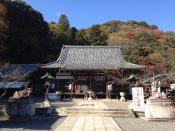
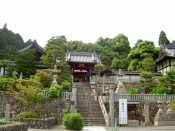
Seiryoji Temple
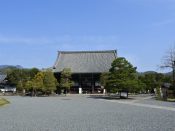
Seiryoji Temple is also known as Saga Shakado.The principal image of the temple is a standing wooden statue of Shakyamuni Buddha (National Treasure), one of the three Tathagata of Japan.On March 15, Nirvana and Otaimatsushiki will be held.Saga Dainenbutsu Kyogen (Kyoto’s three major nenbutsu kyogen)....
Nagaoka Tenmangu Shrine
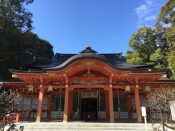
Nagaoka Tenmangu Shrine is the place where Sugawara no Michizane stopped by when he was left for Dazaifu Tenmangu Shrine in 901.Hachijogaike Pond, which stretches in front of Nagaoka Tenmangu Shrine, was built in 1638 by Prince Tomohito Hachijo.Around Hachijogaike Pond is Kinsuitei, famous for its b....
Nonomiya Shrine
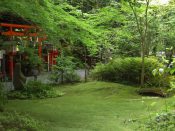
Nonomiya Shrine is said to be the place where the Princess purified herself before going to Ise Shrine as the Emperor's messenger.In accordance with the legend, the Saigu procession is held on the third Sunday of October every year.Nonomiya Shrine is especially popular among women and attracts many ....
Hoshakuji Temple
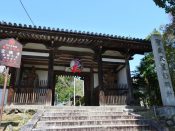
Hoshakuji Temple is a temple of the Shingon sect of Buddhism and was established by Emperor Shomu.It is commonly called "Takaraderera" because in 723, a dragon god introduced uchiide (goddess Benzaiten) and kozuchi (god Daikokuten) from karado (China).Legend has it that Issunboshi rode a bowl from S....
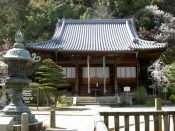
Hourinji Temple
Hourinji Temple was originally founded in 713 at the request of Emperor Genmei.Horinji Temple is also mentioned as a representative temple in Sei Shonagon's Pillow Book "Tera no Dan".The principal deity, Kokuzo Bosatsu, is one of the three Kokuzos in Japan and is also known as "Saga no Kokuzosan" (t....
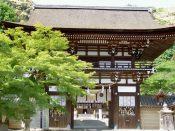
Matsunoo Taisha
Matsunoo Taisha is one of the oldest shrines in Kyoto.Within the precincts of the temple are the Shofu-en Garden (Joko no Niwa, Kyokusui no Niwa, and Horai no Niwa) by Mirei Shigemori.Officially, it is called "Matsunoo Taisha," but locals often call it "Matsuo taisya.It is also famous as the god of ....
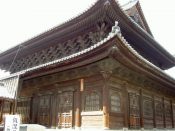
Myoshinji Temple
Myoshinji Temple is the head temple of the Rinzai sect of Zen Buddhism.Myoshinji Temple is the largest Zen temple in Japan, measuring approximately 500 m east to west and 619 m north to south, and has 46 temples in its vast grounds of approximately 100,000 tsubo.The Hatto and bathrooms are open for ....
Muko Shrine
Muko Shrine is dedicated to Mukojin, the god of fire and lightning, Tamayohime-no-mikoto, and Emperor Jinmu.The main shrine was modeled after the Meiji Shrine.There is a preaching stone on the south side of the torii gate.It is said to be the stone on which Nichizo stood when he preached to passersb....
Yamazaki Shoten
Yamazaki Shoten (Kannon Temple) is said to have been founded in 899 as the temple of Emperor Uda's wish, but this is not certain.In 1681, with the support of the Sumitomo, Konoike, Mitsui, and other wealthy merchants, the temple was rebuilt with the eleven-faced thousand-armed Avalokitesvara Bodhisa....
Yokokuji Temple
Yokokuji Temple was founded in 806 by Enchin of Kiyomizudera Temple. It is also called "Yanagidani Kannon" because the main deity is the eleven-faced, thousand-armed, thousand-eyed Kannon (Goddess of Mercy).One day when Kukai paid a visit to the temple, he saw a parent monkey washing the eyes of a b....